)
)
)
How to 10X Your Creative Testing Without Losing Your Mind
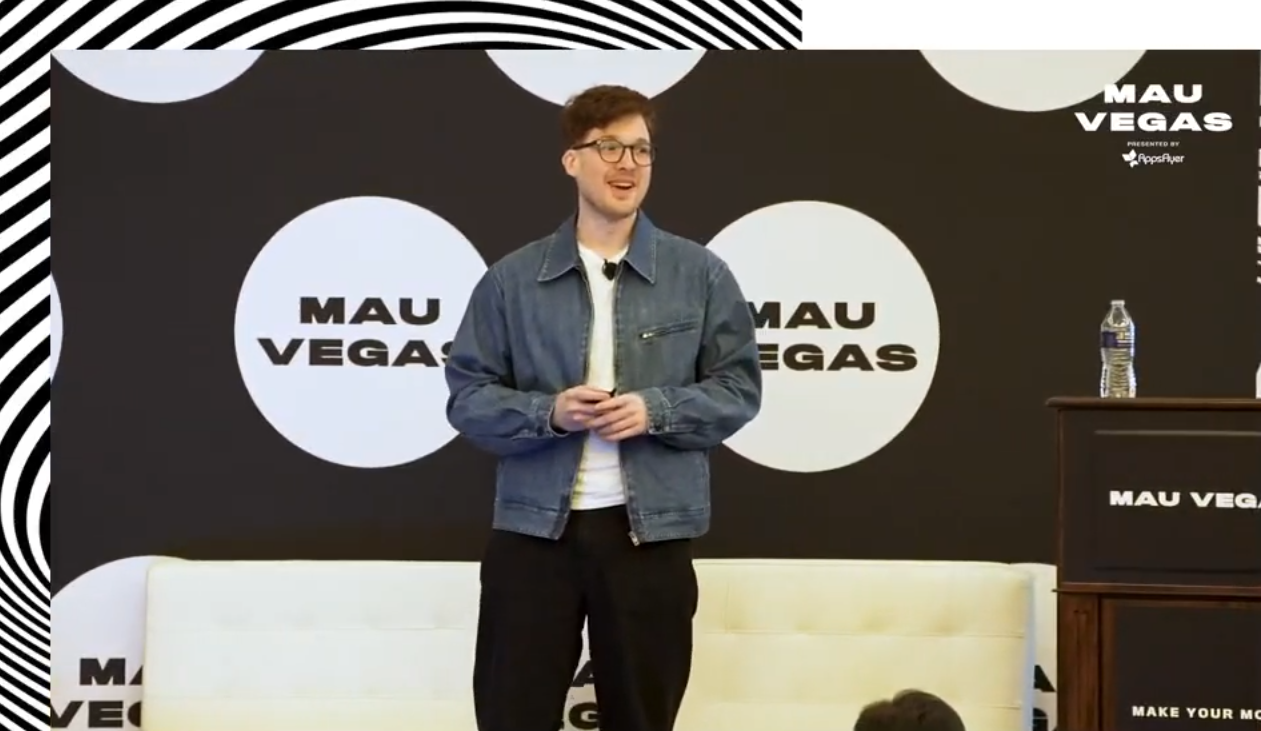
- Event: MAU Vegas 25
- Date: Thursday, May 22, 2025
- Speaker: Félix Boudreau, Head of Growth and Marketing, Pok Pok
- Estimated read time: 6 to 8 minutes
Quick Read Summary
At MAU Vegas 25, Félix Boudreau explained how Pok Pok turned creative testing from a resource drain into a repeatable engine for growth.
By tightening processes, building a small but creatively obsessed team, and using modern AI tools for marketers, the company scaled its output tenfold while reducing cost per trial by seventy percent.
His approach rejects the idea that success comes from luck or a single breakthrough asset. Instead, he champions a model built on rapid experimentation, structured learning, and relentless iteration. Even subtle creative shifts can produce outsized returns, and the teams who embrace this truth are the ones who stay ahead.
Boudreau’s framework shows how any brand, regardless of size, can manage a high volume of tests without losing focus. His message is clear. Creative testing is not chaos. It is a discipline that becomes powerful when approached with curiosity, structure, and a commitment to constant learning.
The New Reality of Creative Volume
When Boudreau opened his session with the simple question of how many ads top apps test each year, most people guessed somewhere between a few hundred and a thousand. The real number was far higher.
The health and fitness category alone includes apps testing about seven thousand ads per year, with leaders such as Impulse and WalkFit reaching more than fifty thousand. These are enormous volumes, often supported by multi million dollar budgets and sophisticated creative pipelines.
Still, the scale itself is not the surprising part. It is why these brands test so much.
“Your success rate in creative testing is not going to be high. Even if you are strong at this, four to five percent is healthy. Below two percent, it probably means you do not understand user psychology well enough or your design needs work.”
Low success rates make high volume essential. Any brand that expects creative breakthroughs must commit to consistent testing. The question becomes how to manage this without burning out your team or losing track of what works.
This is exactly where Pok Pok’s experience provides a model that others can adopt.
A Framework Built for Focus and Speed
Pok Pok is an educational app designed for children aged two to eight. Its purpose is gentle and simple. It creates a calm, non addictive digital environment, which stands in contrast to many mainstream apps. Parents often mention how easy it is to take the device away without tears, something Boudreau jokes any parent can appreciate.
But this calm experience on the front end hides a disciplined and relentless testing structure behind the scenes. When Pok Pok committed to scaling creative testing, results did not arrive in a straight line. Output increased quickly, but performance took longer to catch up. Eventually the first real winner appeared, and learning began to compound.
“Once that first winning creative landed, everything picked up. Trials went up more than two hundred percent and cost per trial dropped seventy percent. That is when the team really saw the impact.”
The process that produced this result rests on three pillars.
- The right team
- The right process
- The right approach to iteration
Each one is simple on its own, but together they form a testing system that does not collapse under pressure.
A Team Designed for Creative Obsession
Pok Pok’s internal structure is intentionally lean. There is nothing bloated or bureaucratic about it. The team is designed to move quickly, communicate constantly, and stay close to both data and storytelling.
At the centre is the UA manager. This person runs campaigns, understands the nuances of Meta testing, and manages budgets with precision.
Next is a role Boudreau calls the creative UA manager. It is part project manager, part creative strategist, and part quality filter. This person connects insights to production, manages a continuous flow of briefs, and helps define what gives an ad its performance edge.
Designers sit beside these roles, not under them, and they work with considerable independence. One may specialise in motion and another in static assets, but both are expected to contribute ideas, not just execution.
Finally, someone inside the company manages influencer and UGC relationships. Boudreau stresses that working with good creators takes time, and the quality gap between average UGC and strong UGC is significant enough to impact performance.
This core team is supported by freelancers and agencies as needed. Additional support is critical to prevent bottlenecks, especially during periods of high output. Agencies provide fresh thinking. Freelancers help extend capacity. Both play important roles, but the most valuable creative learning remains inside the organisation.
“You want people who talk about ads every day. What won yesterday, what lost this week, what competitors are testing, what creators are doing in organic. Trends matter, and curiosity keeps the team sharp.”
Curiosity, not size, is the defining quality of a high functioning creative team.
AI Tools That Multiply Output Without Chaos
Creative testing today is inseparable from the rise of modern AI tools for marketers. Boudreau was clear about this. AI does not replace team capabilities, but it creates leverage that allows small teams to behave like large ones.
On the operational side, he uses tools like Kitchen and Motion for creative insights, distribution, and management. On the brainstorming and copy side, tools such as ChatGPT and Claude help produce drafts, messaging variations, and fast content exploration.
The biggest gains appear at the design layer. Generative visual tools allow quick variations, fast concepting, and rapid quality improvements. Midjourney is central to this workflow for still imagery and style exploration.
Music often goes unnoticed, but it makes a significant difference in scroll stopping ads. AI tools like Suno or Epidemic Sound help produce audio that fits the emotional tone without expensive licensing or production time.
There is also increasing value in UGC avatars and synthetic performers. These tools help teams scale creator content without fully relying on human influencers.
“AI lets a lean team produce far more. You still need the strategy and ideas, but output becomes easier to scale without losing quality.”
Used correctly, these tools support a disciplined testing cycle rather than overwhelming it.
The Weekly Cycle That Keeps Everything Moving
Boudreau’s approach is built around a weekly rhythm. The team does not wait for major launches or long testing windows. They work in short, sharp cycles that maximise learning and maintain momentum.
Monday begins with analysis. The UA manager reviews test results, identifies what worked, what underperformed, and what signals appeared early. This informs the weekly brainstorm, led by the creative UA manager.
This session blends data with creative exploration. The team discusses top spenders, promising new ideas, recent competitor trends, and anything interesting happening in organic social.
“We found a lot of success reproducing organic content. Trends on Instagram and TikTok can spark great ideas. If something works in culture, it often works in ads.”
New assets are built in the middle of the week. Tests are launched from Thursday to Sunday, when Pok Pok sees the lowest cost conversions.
They test for three days only. This may sound aggressive, but it works.
“Good creatives rise fast. We usually see winners in twenty four to forty eight hours.”
The short testing window reduces clutter, keeps the team focused, and helps ensure a consistent flow of new ads.
A Creative Matrix That Brings Order to Volume
High output creates its own problem. The more ads the team produces, the harder it becomes to stay clear on direction. To manage this, Pok Pok built a creative matrix that organises tests along two dimensions.
The first is the angle. Angles represent value propositions, such as Pok Pok as a travel tool, a calming parenting tool, or an educational product.
The second is the format. Formats include text wall, notes app, UGC, carousel, or motion based creatives.
Mapping both dimensions helps the team understand which areas are saturated and which remain under explored. It prevents teams from repeating ideas and highlights where opportunities exist.
“It stops you from throwing spaghetti at the wall. It creates structured curiosity.”
The matrix is one of the clearest examples of how discipline supports creativity, not the other way around.
Why Naming, Copy, and Data Discipline Matter
Creative testing produces a flood of assets, data points, and subtle variants. Without a strong structure, teams waste time digging through old files and lose insight into what truly works.
Pok Pok solves this through three simple systems.
First, a naming convention that assigns clear meaning to each creative. This allows accurate analysis and faster collaboration.
Second, internal tracking for all key metrics. Performance does not live inside Meta forever, and native dashboards are not ideal for deep reference.
Third, a library for winning copy. Copy matters more than many realise. Once a headline or narrative resonates, it becomes an asset that can be reused across the funnel.
Boudreau shared a telling example.
“We had an ad with really strong copy. We added that same language to our onboarding screens and saw a twenty five percent lift. Good copy in ads can improve your whole product journey.”
This is where performance and product blend. Strong creative testing fuels improvements far beyond acquisition.
Iteration: The Most Underrated Growth Lever
Pok Pok’s iteration model is simple. Seventy percent of their weekly output focuses on iterating on past winners. Thirty percent goes toward new concepts. These proportions shift when needed, but iteration remains the core of their approach.
Iteration does not mean minor tweaks only. It can involve exploring a new angle, applying a new format, repurposing a story, or even playing with unexpected visual ideas.
One striking example came from a winning text wall ad. After it began to fatigue, the team brainstormed ways to refresh it. Someone suggested printing the tweet featured in the ad and sticking it on a street pole. The idea made no logical sense, but it sparked interest.
They tested it anyway.
“It worked better than the original. Sometimes things do not need to make sense. They just need to make people stop scrolling.”
The team then added motion to it. Eventually they even added a fake hair to trick the viewer, which performed well but was retired after users reacted strongly.
These examples illustrate the creativity that becomes possible only after structure is in place. Without structure, playful ideas feel risky. With structure, they become opportunities.
Building a Culture That Embraces Experimentation
Near the end of his session, Boudreau received a question about shifting from a non experimental culture to one that embraces testing.
His answer was simple.
“Show results. Once the team sees wins, the mindset changes quickly. You just have to start the wheel.”
Pok Pok often turns to user conversations to inspire strong hypotheses. When multiple parents talked about using the app on planes, the team turned that feedback into a travel campaign. It worked because it came directly from user truth.
The lesson is straightforward. User input builds better hypotheses. Better hypotheses lead to better creative tests.
Inside versus Agency: Why You Need Both
Another question asked about the balance between in house creative production and agency support.
Boudreau acknowledged that external partners bring valuable ideas, but expecting immediate results is unrealistic.
“You cannot expect agencies to hit in the first week or even the first month. They need time to understand your audience.”
Internal teams retain knowledge and move quickly. Agencies provide fresh perspective and can break creative patterns. The healthiest approach blends both.
Why This Matters for the Future of Creative Testing
Creative testing is becoming more complex as costs rise, AI evolves, and platforms change. Yet the fundamentals remain the same. Strong testing cultures rely on curiosity, structure, and willingness to learn from failure.
Boudreau’s framework demonstrates that creative testing does not need to be overwhelming. When teams stay agile, maintain discipline, and explore ideas boldly, results follow.
“Master the art of iteration. Build a lean team. Structure everything. Create a weekly learning cycle. If you do that, you will get better and better at ads.”
For any brand trying to scale tests, reduce waste, or improve creative performance, these principles offer a practical and proven path forward.
About the Speaker
Félix Boudreau, Head of Growth and Marketing, Pok Pok
Félix Boudreau leads growth and marketing at Pok Pok, an award winning educational app designed for young children. With a background in user acquisition, creative strategy, and performance focused experimentation, he has built a lean and highly disciplined team that excels in systematic creative testing. His work combines thoughtful storytelling, rapid iteration, and modern AI tools to scale output and drive efficient, long term growth.