)
)
)
Beyond Bottom Funnel: The Hidden Power of Brand Metrics and Upper Funnel Attribution in Modern Marketing
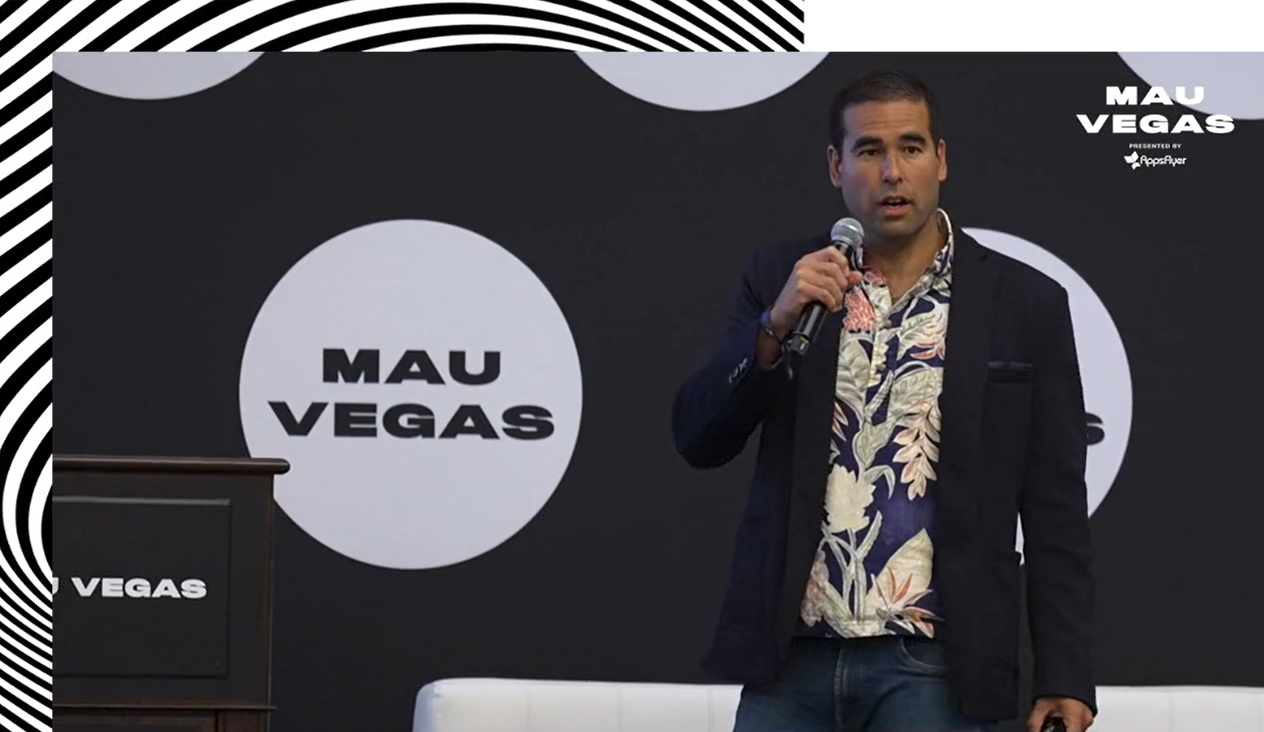
- Event: MAU Vegas 25
- Date: Thursday, May 22, 2025
- Speaker: Thomas Hopkins, Fractional CMO and Head of Growth, Growthops LLC
- Estimated read time: 6 minutes
Quick Read Summary
If you only optimise what you can easily attribute, you will systematically under invest in what actually drives considered purchases.
Traditional performance reporting often over weights the last measurable touch, typically a click, and under explains everything that happened before it. For any product with meaningful consideration, that blind spot can stretch from weeks to a year, and privacy constraints, multi device journeys, and fragmented channels make stitching it back together even harder.
The practical answer is not to abandon performance metrics, it is to expand the measurement stack, so brand metrics and upper funnel attribution become decision grade inputs. That includes longer running lift tests, geo holdouts, post conversion surveys, correlation analysis across owned and earned signals, and a structured brand tracker that ties awareness and consideration to market share movements.
When you do this well, “brand” stops being a debate topic and becomes a controllable system, one that helps you pick the right segments, diagnose why you are losing conversions despite strong awareness, and defend budget decisions with evidence that finance leaders can respect.
The funnel fallacy is a measurement failure, not a strategy problem
The core claim is simple, the funnel is not the issue, the data lens is. When marketers treat last click ROAS as the truth, they end up optimising the bottom triangle of the journey while having “zero visibility” into what actually shaped demand before the final action.
Hopkins frames this as the “funnel fallacy”, the belief that modern measurement tools automatically explain the whole journey. Even when teams add more advanced methods, such as lift testing, incrementality testing, media mix modelling, and multi touch attribution, they can still miss the pre click reality, especially for products with longer consideration cycles.
“You still really do not have a complete picture of what is going on.” Thomas Hopkins, Fractional CMO and Head of Growth, Growthops LLC
Interpretation, this is why performance teams often feel “in control” while growth stalls. You are optimising for the part of the journey that is easiest to measure, not the part that most determines the customer’s choice.
Practical action, audit where consideration actually happens for your product. If your cycle is longer than a month, treat last click ROAS as an incomplete signal, then build a plan to add upper funnel attribution signals that can survive privacy constraints and multi device behaviour.
Use multiple attribution types, then tell one coherent story
If you want executive confidence, you need triangulation. Hopkins argues that many companies rely on last click, or an MTA model that is “off or wrong” for considered purchase products, including free trials, B2B, and SaaS. The fix is not a single replacement model, it is a portfolio of attribution methods that reveal different parts of the truth.
He points to several levers:
- Media mix modelling can help in shorter consideration windows, but can be weak outside that range
- Lift tests can help, but only if they run long enough, he cites an example where a three month lift test still failed to capture the full effect
- Geo holdouts can be run by holding out specific regions, he gives examples such as holding out Texas or California for a year
- A broad holdout can be highly educational, he recommends a 10 percent holdout across the business to understand what paid channels are really doing
- Post conversion “how did you hear about us” surveys provide a grounded, human level view that can challenge platform attribution
Interpretation, attribution becomes persuasive when you stop presenting isolated charts and start presenting convergence. Finance leaders in particular respond to “show me the data” logic, especially when different sources contradict last click in a consistent direction.
Practical action, standardise an “attribution evidence pack” for quarterly planning. Include last click, MMM where appropriate, lift or geo holdout results, and survey summaries. Your goal is not perfect certainty, it is a decision grade narrative that explains why performance appears strong while incremental impact may be lower, or vice versa.
Brand metrics are not soft, they are leading indicators you can operationalise
Upper funnel attribution usually fails because teams do not define what to track, where to store it, or how to connect it to outcomes. Hopkins outlines a practical set of brand metrics, then recommends correlation analysis to link those signals to downstream movement.
Examples he calls out include:
- Owned social views and impressions, ideally ingested into your own database
- Editorial cadence, such as articles published and frequency
- Influencer post views and brand mentions
- Homepage first time visitor traffic
- App Store page views and brand term searches
Interpretation, these are not vanity metrics if you treat them as inputs into a system. Correlation analysis is not proof of causation, but it is a fast way to discover which signals reliably move together, and which are noise.
Practical action, choose three to five brand metrics you can capture consistently, then build a weekly view that plots them alongside one or two business outcomes, such as trials started or qualified leads. Use correlation analysis to identify the strongest relationships, then test causality through lift tests or holdouts where possible. This is the foundation of upper funnel attribution that can scale.
Build a performance brand tracker that connects awareness, consideration, and market share
Most companies measure the tip of the iceberg. Hopkins’ most distinctive recommendation is a “performance brand tracker” that measures awareness, consideration, and market share across competitors, then uses segmentation to identify where growth is actually available.
He defines awareness and consideration as survey based measures:
- Awareness, have you heard of this company before
- Consideration, would you consider using this company, or have you considered it
He then extends the tracker to include market share or usage, which many brand trackers do not include. His approach is to ask a straightforward survey question such as which software or product do you use, with careful survey design to avoid bias.
Interpretation, the strategic value comes from diagnosing mismatches. If awareness and consideration are healthy but usage is low, the problem is rarely “more ads”. It is often message, sales motion, product marketing, or segment fit.
Practical action, run a quarterly tracker against your real competitive set, even if you start small. Track awareness and consideration for every competitor, then add a usage or market share question. Do not stop at the topline, break results down by segment that matters to your business, such as industry verticals or user types.
Segment analysis turns brand metrics into growth moves
Hopkins illustrates the power of segmentation with a client example. By breaking market share down by verticals, the team found one segment where market share lagged despite strong awareness and consideration. In the example, that segment was e commerce, showing 13 percent share, while other segments were closer to 20 to 24 percent.
The next step was not guesswork. The survey went deeper for that vertical, asking why people who considered the brand did not choose it. The pattern suggested that the product was perceived as “not made for them”, indicating a positioning and messaging problem rather than a pure acquisition problem.
The corrective action was to use e commerce influencers who already used the product, then run that content as social ads across channels including Facebook, Instagram, and TikTok. The outcome in the example was rapid vertical growth, moving from 13 percent to 14 percent in the first quarter, then rising to 16 percent and then 20 percent as the team improved content and UGC execution. Overall business market share in the example rose from 18 percent to 19 percent to 21 percent.
Interpretation, this is what “brand metrics” look like when they are actionable. You do not just measure awareness, you locate where the brand is misunderstood, then you deploy proof in the language of that segment.
Practical action, pick one segment where you suspect perception is holding growth back. Use a survey to identify the top reasons for non choice, then build creative that directly addresses that objection using credible voices from the segment. Treat this as performance creative with brand discipline, not as a separate brand campaign.
Stop arguing brand versus performance, make every performance asset brand consistent
Budget debates often get stuck on the false binary, brand versus performance. Hopkins’ counter is blunt, “everything that you are doing in marketing is brand marketing, everything.” Performance ads still need brand consistency, including hooks, creative quality, and brand cues, because only companies with strong brands endure.
His practical guidance is also important, he is not advocating pulling spend away from performance channels in favor of impression only plays. Instead, he argues for keeping performance spend, ensuring every ad is on brand, and focusing energy on the right verticals so your spend translates into real business impact.
Practical action, formalise a creative standard that applies to all performance work. Ensure your best performing ads still reinforce the brand, then use the performance brand tracker to decide where to push and where to fix messaging. This is how you “beat control” without losing accountability.
Conclusion
The hidden risk in modern marketing is not that attribution is broken, it is that teams accept partial attribution as the full story. If you only measure the bottom of the funnel, you will optimise the bottom of the funnel, and you will miss the upstream forces that determine whether prospects ever become buyers.
The path forward is measurable. Expand upper funnel attribution through longer tests, geo and business holdouts, survey based signals, and correlation analysis across brand metrics. Then turn that data into a performance brand tracker that ties awareness and consideration to market share shifts by segment. When you do, brand becomes a controllable growth lever, not an argument, and your budget decisions become easier to defend because they are backed by multiple lines of evidence.
Speaker bios
Thomas Hopkins, Fractional CMO and Head of Growth, Growthops LLC. Thomas Hopkins is a veteran growth leader who has scaled marketing at notable technology companies. He previously led performance and lifecycle marketing at MasterClass and passenger acquisition growth at Lyft. He specialises in marketing measurement frameworks that connect brand health to business outcomes, with expertise in multi touch attribution and marketing analytics. He now advises seed to Series C companies on building sustainable growth engines.