)
)
)
Beyond the Standard Paywalls
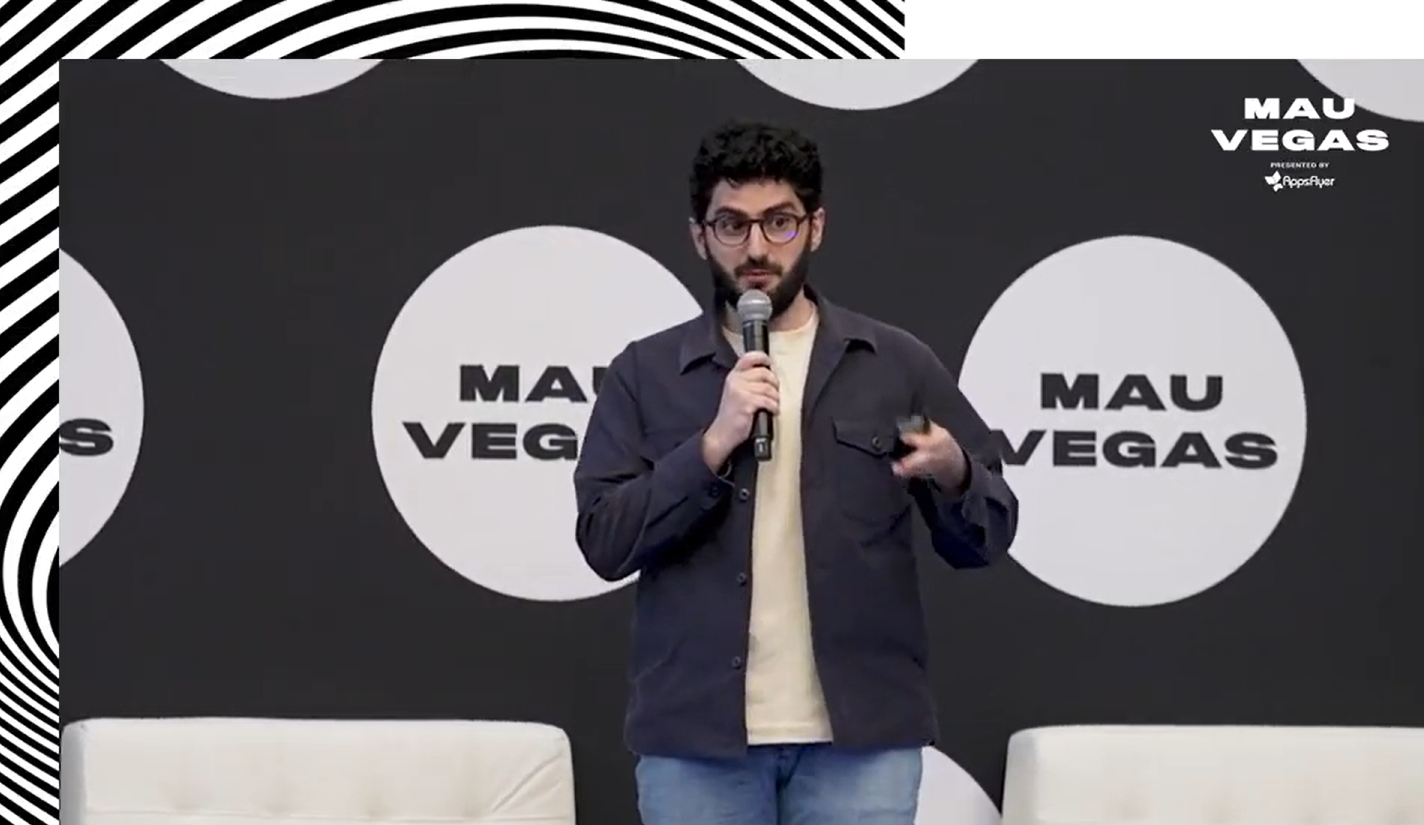
- Event: MAU Vegas
- Date: 5 June 2025
- Speaker: Tigran Mkrtchyan, Head of Growth, CoinStats
- Estimated read time: 6–8 minutes
Quick Read Summary
Most paywall programs are over optimized for layout and price points, and under optimized for attention and emotion, which is where purchase decisions actually start.
CoinStats tested a simple idea, put a short animated story in front of the paywall, then measure what happens. In a Black Friday campaign, the animation plus paywall approach delivered roughly 3 times higher conversion on iOS, and 3.3 times on Android, compared with a paywall only experience.
The deeper lesson is not “add animation.” It is that monetization is downstream of motivation, and motivation is downstream of emotion. If your paywall moment does not earn attention, create meaning, and match the context your user is already in, you are asking pricing and packaging to do a job they cannot do alone.
The real problem is not the paywall, it is the moment before it
If your team is only debating paywall variants, you are likely fighting for percentage points in a place where the user has already decided to ignore you. Paywall optimization should start one step earlier, at the moment you ask for attention.
CoinStats framed this as a direct A B comparison, animation plus paywall versus paywall only, with a single goal, create a more engaging environment and measure the conversion impact. The headline result was dramatic, almost three times higher conversion on iOS, and 3.3 times on Android, even with acknowledged experimental limitations.
Practical implication for growth leaders is straightforward. Before you rework pricing, first ensure the paywall moment earns attention. If users bounce or autopilot past the prompt, your best subscription offer will still underperform.
Action you can take this quarter, define a pre paywall attention metric, for example icon tap rate, pre paywall completion rate, or time to paywall view, then treat it as a first class KPI alongside conversion.
Attention is the first conversion, build a hook that cannot be scrolled past
The strongest part of this case study is not the meme, it is the hook design. CoinStats deliberately used an unexpected visual sequence, a green hand icon, then a short animation where Pepe the Frog emerges, followed by a champagne splash, then the offer.
Mkrtchyan described these as two grabbing moments, the character reveal, and the champagne splash, designed to stop the user and encourage interaction. He anchored the concept in a classic advertising idea, attention precedes persuasion.
“The way we sell is to grab attention first.” Raymond Rubicam
For modern app teams, this maps cleanly onto creative testing logic. You are not only testing copy and price, you are testing whether your monetization surface wins the first second.
Action you can take this quarter, run a “hook sprint” that produces three to five pre paywall openers with different hook types, visual surprise, curiosity, micro story, interactive prompt. Ship them behind a remote config, measure hook engagement first, then measure paywall conversion second.
Emotion is the shortcut, meme culture is the delivery mechanism
A common mistake in in app monetization is assuming that users make subscription decisions logically. CoinStats explicitly challenged that assumption, and built the experience around emotional connection.
Mkrtchyan’s argument was that cultural icons create instant familiarity, and that users are already emotionally connected to memes. In the Black Friday creative, the team combined two references that were already meaningful to their audience, Pepe the Frog as a crypto culture symbol, and a champagne toast reference associated with celebratory confidence.
“People love memes, they are already emotionally connected with them.” Tigran Mkrtchyan, Head of Growth, CoinStats
They also pointed to decision science as the rationale, emotion leads, logic rationalizes later, with Reforge’s ELMR framing used as a practical shorthand for how emotion becomes motivation and reward.
The interpretation for senior teams is not that you need internet humor in your product. It is that your paywall is competing with everything else on the phone, and emotional salience is how you win the competition. The right creative makes the offer feel like part of the user’s identity and moment, not an interruption.
Action you can take this quarter, build an “emotional marketing” brief for your subscription surfaces. Define the emotion you want to evoke, such as relief, confidence, belonging, mastery, then choose creative devices that evoke it, such as social proof, aspirational identity, playful delight, or narrative tension and release.
Context multiplies intent, the offer has to match what users believe right now
Even great creative will underperform if it is mistimed. The CoinStats test was not in a neutral period, it was Black Friday, and it was during a crypto bull run, both of which elevate willingness to pay.
CoinStats blended those contexts directly into the headline, “Everyone deserves premium this bull run,” and paired it with a discount cue. The point is not the specific wording, it is the alignment of message with the user’s external narrative. In a bull run, users feel optimistic and opportunity driven, in Black Friday, they expect deals and urgency.
Define terms explicitly for your internal stakeholders.
A bull run is a period when a market, especially crypto, is rising strongly, and sentiment shifts from caution to confidence. Buy the dip is a common investing phrase that means purchasing when the price falls, expecting a rebound, and CoinStats used it as both a paywall theme and an ad banner concept that performed well.
Action you can take this quarter, create a monetization calendar that pairs product moments with cultural moments, and define the matching narrative for each. Then write paywall creative that borrows the user’s existing intent, rather than trying to manufacture intent from scratch.
Repeatable creativity beats one off stunts, build a system for themed iterations
A frequent concern from product leaders is that creative approaches do not scale. CoinStats addressed this by treating the approach as a repeatable pattern, then running themed iterations.
They described a Halloween test using a spider animation shaped like the Bitcoin logo, which produced promising results and built confidence to proceed with the later Black Friday version. They also described a New Year concept built around a culturally relevant character for their audience, and continued to ship variations rather than treating the idea as a single campaign.
This matters because a scalable paywall optimization program needs a creative engine, not only analytics. The “engine” is a set of reusable patterns, a hook, a short narrative beat, a contextual message, and a clean handoff into the paywall.
Action you can take this quarter, document your top three creative patterns and require each new paywall test to declare which pattern it is using, what emotion it targets, and what context it leverages. This forces discipline while keeping room for originality.
Implementation matters, make it testable without app releases
The most practical part of Mkrtchyan’s approach is that it was designed for speed. Animations and icons were configured from the backend, and paywalls were created in Superwall, enabling changes without app updates. Animations used Lottie files, a lightweight JSON format, and audio used AAC and MP3. When the animation concluded, it sent an event to Superwall to trigger the paywall.
He also shared an operational detail that experienced teams will recognize immediately, review risk. One mitigation was to disable animations before App Store submission to avoid approval delays.
Action you can take this quarter, treat your paywall stack as an experimentation platform. If your current tooling forces app releases for every iteration, prioritize a backend configurable layer for pre paywall experiences, and ensure analytics instrumentation can separate hook engagement from paywall performance.
Measurement discipline, celebrate the lift, acknowledge the limits
The headline conversion lift is compelling, and it should prompt action, but it should also prompt methodological rigor. Mkrtchyan noted limitations, including not using control groups, and described the approach as essentially comparing variants without the full experimental structure they would have preferred. The goal for other teams is to keep the creative ambition, and add stronger experimental discipline.
A practical way to do that is to run split tests that isolate variables. For example, test animation versus static with the same message, then test message variants with the same animation format, then test different hook types with the same paywall.
Action you can take this quarter, define an experiment template for paywall optimization that includes, hypothesis, primary metric, guardrail metrics, segment plan, and a plan to avoid novelty bias. Then require every creative test to be evaluated against that template before it is scaled.
What this means for modern paywall programs
The lesson from CoinStats is not “make your paywall fun.” It is that subscription growth is a creative and psychological problem as much as it is a pricing problem.
When you engineer the sequence, hook first, emotion second, context third, and only then the offer, you stop asking the paywall to do all the work. You also create room for non obvious winners, such as long video formats that teams assume will fail, but users actually watch.
Action you can take this quarter, audit your current paywall journey and ask three questions.
- What is the hook, and would a user notice it in one second
- What emotion does this experience evoke, and is it aligned with your brand
- What context does the message assume, and is that context true for the user right now
Then build tests that answer those questions with data.
Conclusion
Paywall optimization is entering a phase where marginal UI tweaks will not be enough, because attention is scarcer, and users are better trained to ignore prompts that feel transactional. The stronger thesis is that conversion follows meaning, and meaning is created by hook, emotion, and context, delivered through a system that lets teams iterate quickly and measure honestly.
CoinStats’ results show what happens when you treat the moment before the paywall as a product surface worthy of creative strategy. If your monetization program wants a step change, not a step, start there.
Speaker
Tigran Mkrtchyan, Head of Growth, CoinStats. Tigran leads growth at CoinStats, a freemium crypto portfolio tracker. With expertise in performance marketing and product experimentation, he specialises in blending data, culture and storytelling to create high-impact monetisation strategies. His work has been featured across industry publications and global growth communities.