)
)
)
Profitably Scaling User Acquisition with Web to App Funnels
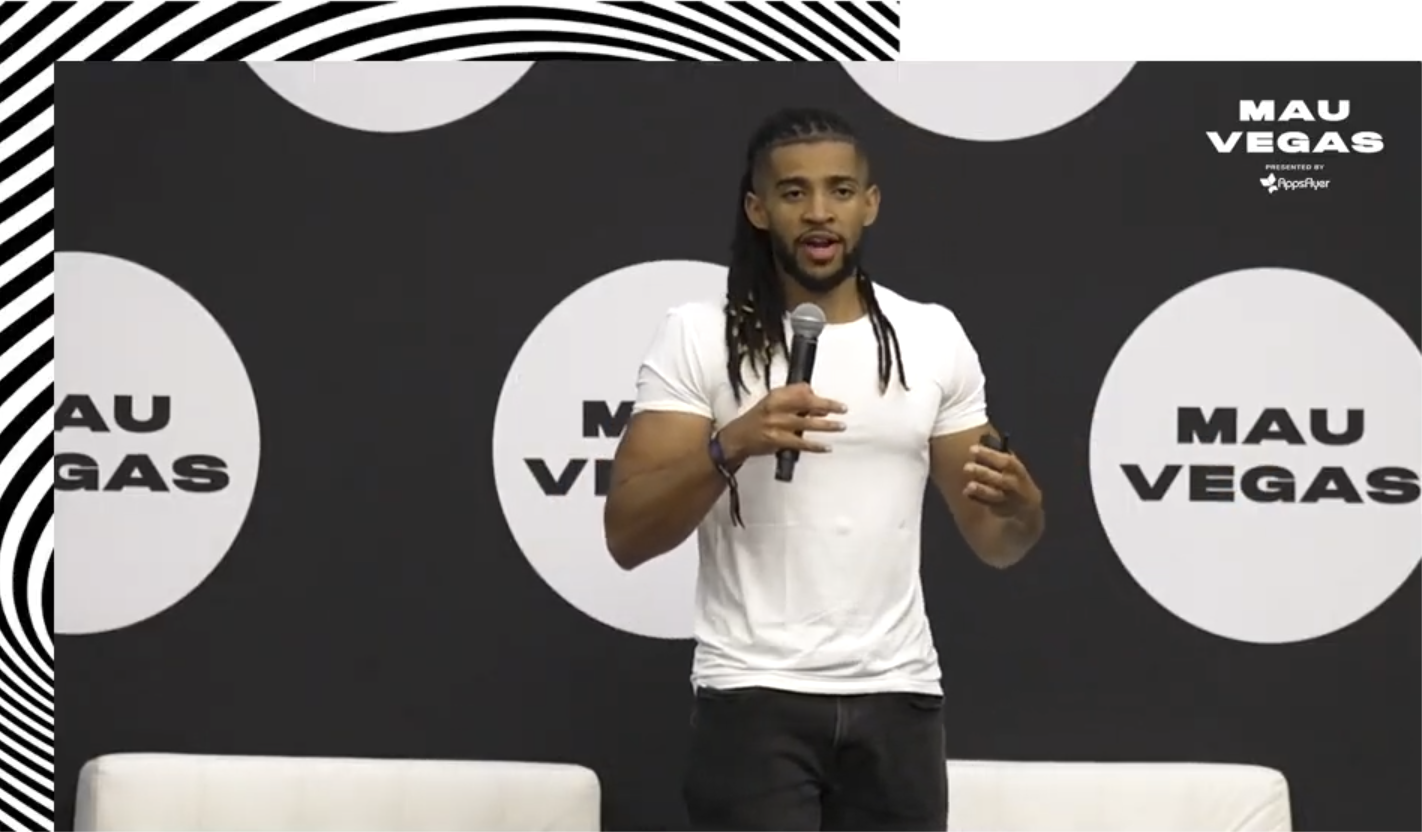
- Event: MAU Vegas 25
- Date: Thursday, May 22, 2025
- Speaker: Nathan Hudson, Founder of Perceptics
- Estimated read time: 7 to 9 minutes
Quick Read Summary
Subscription apps do not stall because their paywalls are weak, they stall because their acquisition funnels are built for the minority who are ready to buy immediately.
With acquisition costs rising, measurement getting noisier, and subscription fatigue making users more cautious, profitable scale now depends on web to app funnels that match the journey to the user’s intent, rather than forcing everyone through the same conversion bottleneck.
Nathan Hudson, Founder of Perceptics, argues that intent, meaning purchase readiness at a given moment, is the missing variable in most performance systems. When you route users by intent, you stop wasting spend on people who need proof, education, or reassurance before they can commit.
The result is a portfolio approach, more funnel types, more messages, more ways to build trust, and a measurement model that allows for longer conversion windows.
The scaling ceiling is the users you lose after onboarding
Most subscription optimization is built around a single assumption, conversion should happen quickly, ideally during onboarding. That is understandable, because a large share of paywall interactions happen there, and a commonly referenced benchmark is that the majority of paywall events occur during onboarding.
The issue is what this focus hides. If your funnel is engineered to monetize only the people who are ready today, every incremental dollar you spend buys more of the same, a small subset who convert fast, and a much larger group who bounce, uninstall, or churn before they understand the value. Hudson’s framing is that even strong trial conversion still leaves most paid acquisition spend funding non buyers.
What this means commercially is that profitable scale is not primarily a paywall problem, it is a demand capture problem. If you cannot keep value alive for the 80 plus percent who are not ready immediately, your addressable audience stays artificially small.
What to do next, define a second success condition for acquisition beyond immediate trial start, meaningfully engaged prospects who have a route back to purchase later, and design for that cohort deliberately.
Intent is not intention, and confusing them breaks performance
A user can have a strong intention, such as wanting better sleep or less stress, while having low intent to subscribe today. Hudson distinguishes them clearly, intention is the job to be done, intent is readiness to purchase at a given point in time.
The evidence shows up in behavior. When you assume all traffic has equal intent, you slow high intent users with unnecessary steps, and you pressure low intent users into an early paywall they are not prepared to accept. Both outcomes damage unit economics, one by adding friction to revenue, the other by burning spend and goodwill.
The strategic takeaway is that conversion rate can become a misleading north star. You can improve it by narrowing who you serve, while your overall growth potential shrinks because you are not building pathways for intent to mature.
What to do next, build around at least three intent bands, high intent, medium intent, low intent, and treat routing as a core acquisition capability, not a secondary optimization.
Web to app funnels are a control layer, not a single template
Many teams talk about web to app funnels as if they are synonymous with a quiz funnel. Hudson’s point is that this is a category error.
“Web to app does not mean quiz funnel. There is more than one way to do this.” Nathan Hudson, Founder, Perceptics
In practice, Perceptics tests multiple funnel types across categories, including direct to checkout flows, video sales letters, webinars, lead magnets, and content based journeys. The unifying value is control. Web allows you to isolate journeys, tie creative to paths, and preserve identity and attribution signals that are harder to maintain once the user crosses an app store boundary.
The commercial interpretation is that web to app is best understood as orchestration. It lets you choose journey length, proof format, and offer structure by cohort, without rebuilding your app experience each time you want to test an acquisition hypothesis.
What to do next, stop searching for the single best funnel, instead build a portfolio where each funnel exists to solve a specific objection for a specific intent level.
Make quizzes a diagnosis tool, then route users, rather than adding friction for its own sake
Quizzes work when they reduce uncertainty, or when users genuinely expect personalization. They underperform when they become extra steps with no clear payoff. The more scalable use of a quiz is diagnosis, identifying whether the user is ready to pay, and if not, what is stopping them.
Hudson describes using quiz signals to route users to distinct paths, fast checkout for high intent users, proof led content for medium intent users, and longer journeys such as webinars, community, or value first experiences for low intent users. He also recommends using quiz answers to learn what non buyers actually need, by asking direct questions about willingness to pay, and reasons for hesitation.
The important shift is that the quiz becomes both a segmentation asset and a research asset. Instead of repeatedly optimizing the same onboarding paywall, you learn the dominant objections, then build the journeys that address them.
What to do next, instrument quizzes as intent sensors, route low intent cohorts into an alternative path, and feed the reasons for hesitation back into your content plan, your landing pages, and your creative.
Objections are rarely “price”, and discounts cannot solve trust or readiness
When conversion fails, the reflex is often to test price, urgency, or promotional framing. Sometimes that is correct. Often it is not, because the blocker is psychological, not economic.
Hudson gives the example of a grief support app where the barrier was emotional readiness, not price. His conclusion is blunt.
“No number of pop ups or discounts can solve a deep emotional objection.” Nathan Hudson, Founder, Perceptics
He contrasts this with fintech, where the objection is trust and fear of making the wrong decision. In those cases, long form explanation, credible proof, and expert led education tend to do the work that pricing tests cannot.
The strategic meaning is straightforward, objection type should dictate funnel type. Price tests solve price objections, education solves comprehension and trust objections, and reassurance solves emotional readiness objections. Trying to solve every objection with discounting trains users to wait for a deal, and weakens long term unit economics.
What to do next, build an objection map by cohort, then assign an intervention, content, demo, webinar, expert proof, community, or freemium value, before you assign an offer.
Long conversion windows are not a bug, they are the growth unlock
If you route low intent users into education, you have to accept delayed conversion. The reward is that you capture demand you were previously discarding.
Hudson reports seeing conversions six months later from webinar journeys, and an example where a user converted 12 to 18 months later after multiple webinar exposures, for an annual subscription of around $250. That is effectively invisible in many mobile measurement setups unless you deliberately design for it.
The operational takeaway is that scaling requires patience and attribution discipline. If your reporting window is too short, you will label the most scalable programs as failures, and retreat to short term optimization that cannot expand your ceiling.
What to do next, measure outcomes over a horizon that matches the journey, including assisted conversion, time to trial, and cohort payback windows, and hold tests long enough to see signal.
Creative diversity makes a funnel portfolio work
A funnel portfolio only performs if the creative promise matches the journey. A user who clicks an education angle will accept an education journey. A user who clicks a fast results angle will punish delay.
Hudson notes that different funnel types demand different creative concepts, and that reusing the same creative across a quiz funnel and a webinar funnel is a common reason testing stalls. This is not a production problem, it is alignment between the claim you make in the ad and the experience you deliver afterward.
The strategic interpretation is that creative is part of product design in user acquisition. It sets expectations, selects for intent, and determines whether the next step feels coherent or manipulative.
What to do next, plan creative by funnel type, with distinct hooks, proofs, and calls to action for each journey, then treat creative and landing experience as one integrated system.
A practical blueprint for scaling web to app funnels by intent
This becomes manageable when you build one additional journey at a time, and let intent routing expand your scalable spend.
-
Define intent bands you can act on: Start with high, medium, low, based on quiz signals, creative angle, and early behavior.
-
Assign a default journey to each band: High intent, direct path to checkout. Medium intent, proof route, such as a video sales letter or demo. Low intent, education route, such as a webinar, community, or value first experience.
-
Design objection handling before offer design: Decide what must be true for the user to buy, then create the content that makes it true, especially for trust and emotional readiness.
-
Protect high intent conversions from unnecessary friction: Do not force everyone through long journeys. Web gives you the flexibility to separate paths and avoid delay and cannibalization.
-
Measure over the right horizon: If you run long journeys, keep windows long enough to observe delayed conversion, otherwise you will optimize away the strategy that enables scale.
What to do next, the first profitable step is rarely a complete rebuild, it is adding one low intent path, with one serious piece of objection handling content, and measuring it over a realistic timeframe.
Conclusion
Profitably scaling user acquisition is increasingly about widening the audience you can monetize, not pushing the same audience harder. When you design web to app funnels around user intent segmentation, objection aligned content, and matched creative promises, you stop wasting spend on people who are not ready yet, and you create more ways for them to become ready. That is how you scale funnels, not just traffic.
Speaker
Nathan Hudson, Founder of Perceptics, Nathan Hudson runs Perceptics, a growth agency focused on subscription growth through web to app funnels, with an emphasis on intent based routing, creative strategy, and conversion journey design.