)
)
)
SEO and AI
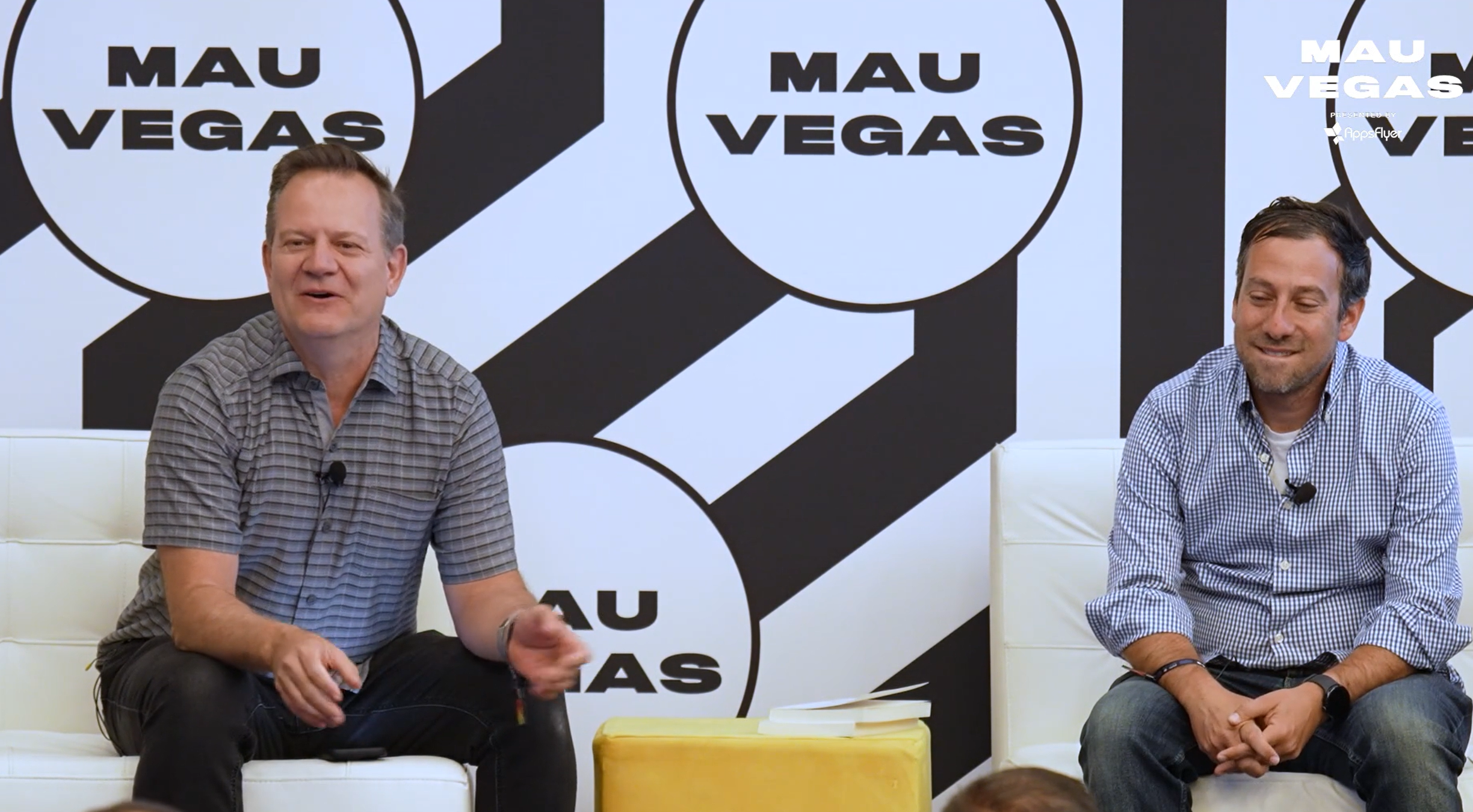
- Event: MAU Vegas 25
- Date: Thursday, May 22, 2025
- Speakers: Eli Schwartz, Growth Advisor and SEO Strategic Consultant, Product Led SEO, Michael Bonfils, Chief Marketing Officer, AutoParts.com
- Estimated read time: 5 minutes
Quick Read Summary
AI is not ending SEO, it is re defining where visibility is earned and how value is proved. The near term impact is fewer clicks, weaker reporting, and a bigger premium on credibility across more than one engine.
Michael Bonfils described the measurement shock of zero click behaviour and AI Overviews, including reports of large click declines, plus a future of reduced tracking and limited investment in reporting tools.
Eli Schwartz argued that the durable response is product led SEO, build for real customer questions, especially in the middle of the funnel, and stop treating top of funnel rankings as the win.
A practical way to move faster is to use AI as a persona based focus group, Bonfils shared a model that turns your personas into AI avatars using DISC style classifications, then uses those avatars to pressure test positioning and generate content angles.
The core shift, SEO becomes cross engine visibility
Bonfils opened with a statement many teams need to hear in plain language.
“SEO is not dead.” Michael Bonfils, Chief Marketing Officer, AutoParts.com
His point was not that nothing changes. His point was that the job still exists, because someone still has to earn placement where people search, even if that search happens inside ChatGPT style tools, Perplexity, or other answer engines. The channel is evolving from a single scoreboard, Google rankings, into a broader responsibility, visibility across multiple engines that summarise, cite, and sometimes answer without sending traffic.
That evolution matters for one reason. Your content is no longer competing only for clicks, it is competing to be the cited source, the referenced brand, the default recommendation, and the trusted explanation.
If you treat this as a formatting problem, you will likely lose. If you treat it as a credibility and customer understanding problem, you have a path.
Zero click search is not just a traffic issue, it is a data issue
Bonfils framed zero click as a structural problem for SEO leaders, not a temporary dip. When the interface answers the question directly, two things happen at once, you lose the click, and you lose the intent data that used to guide strategy.
He described a conversation with Googlers around AI Overviews where marketers shared what they were seeing, including a reported “40% drop” in clicks, and he said the Googlers in the room did not appear to understand the scale of disruption. His takeaway was blunt, the chaos is real, and the feedback loop is not working in the way many assumed.
He then connected this to an operational reality. Google is not incentivised to prioritise free reporting tools for SEOs when the company is allocating effort toward AI, and Bonfils relayed a specific explanation he heard, every engineer put on Search Console is an engineer not working on AI.
Put those pieces together and you get an uncomfortable forecast. Less traffic is only part of it. Less diagnostic clarity is the bigger problem.
Bonfils summarised what he is telling clients, especially leaders who have to report up the chain.
“There’s now going to be less data and more confidence.” Michael Bonfils, Chief Marketing Officer, AutoParts.com
That is a warning and a prompt. The teams that adapt will change how they validate SEO impact, and how they explain it.
Product led SEO, stop optimising for awareness, start optimising for decisions
Schwartz’s counterweight to the uncertainty was strategic focus. He made a direct claim, the best way to capture value, including in a world shaped by zero click answers, is to operate in the middle of the funnel.
His critique of “classic SEO” was familiar, teams often chase top of funnel rankings, then celebrate visibility that does not convert. He illustrated this with a crypto example. Ranking for “Bitcoin” looks impressive, but it does not necessarily map to revenue. He contrasted that with more specific questions that signal consideration.
“How do I trade Bitcoin?” and “What are the tax implications of trading Bitcoin?” were his examples of mid funnel queries that are less vague, more actionable, and more aligned with real customers.
Schwartz also tied this to persona clarity, because you cannot sensibly choose which questions to answer if you cannot name who you are answering for. He described working with a company in the mental health space that did not know its buyer, and then using their data to identify a demographic segment, females aged 25 to 35 living in France. From there, he said they could shape pricing and service choices for that audience.
The underlying principle is the point. Product led SEO starts where the customer is, then builds the content and product story that helps them decide.
Write like an answer engine, build a library of proof
Bonfils offered a practical response that fits the new interface realities, build a deep FAQ library and write in the plain style that an answer engine would generate.
He was explicit about sourcing. If you do not know which questions belong in that library, ask the people closest to customers.
He suggested going to salespeople and other teams to gather the questions they hear repeatedly, then publishing direct answers. His reasoning was pragmatic, that content will be scraped into answer engines, and while it may not deliver “tons of traffic like you would with organic,” it can still earn references.
This is where AI search optimization becomes less mysterious. You are trying to be the most quotable, verifiable source on the topics that matter to your customers, and you are doing it at scale.
A good rule of thumb is to prioritise FAQs where the answer changes behaviour, not just FAQs that reduce support tickets.
- Pricing and tradeoffs
- Eligibility, requirements, and constraints
- Comparisons, alternatives, and decision criteria
- “What happens if” scenarios that reduce uncertainty
That content is not glamorous, but in answer first search, it is often what gets cited.
Michael Bonfils’ persona model, turn personas into an AI focus group
The sharpest tactical idea Bonfils shared was a workaround for the loss of intent data. If you cannot easily see what people searched next, simulate the customer conversation using personas, then use AI to stress test strategy.
He described taking existing personas and turning them into AI avatars, effectively building a persona driven focus group. The model has a clear backbone, psychological classification.
He referenced Myers Briggs style personality systems, then said his preferred model is DISC, which he summarised as dominant, influential, steady, and compliant.
His process, as described, looks like this:
- Start with your existing personas
- Give each persona an identity, including a psychological classification, he used DISC quadrants
- Use a tool like Character.ai to create a named persona with that classification
- Use ChatGPT to generate a full life story for that persona, from birth to the present, to make the persona more coherent
- Interview the persona about your offer, he used an example of selling a backpack in a market, then ask how they would position, sell, and message it
- Use the responses, and even the disagreements, to generate a content strategy grounded in persona logic, not keyword guesswork
The value of this approach is not that the AI is “right.” The value is that it forces specificity. It makes you articulate who the buyer is, what they care about, what they distrust, what language they use, and what would cause them to choose a competitor.
In a world where SEO tooling becomes less transparent, this is a practical way to keep moving, and to produce content angles that feel human because they originate from a persona narrative, not a template.
Hallucinations raise the stakes, credibility becomes the moat
One audience question pushed the conversation into risk. A participant asked about misinformation and whether AI layers could correct bad sourced content. Bonfils answered with a concrete example. He described using an AI tool to prep for a California firearms test, receiving an incorrect answer about the legal age to have a firearm, arguing with the tool, then seeing it correct itself. His reaction was the point, the error is not abstract, it can be dangerous.
Bonfils called out hallucinations directly and noted that competitors are improving, which should reduce errors over time, but he did not pretend the problem is solved today.
Schwartz responded by reframing the long arc. He argued that AI is replicating humans, and that changes what “gaming SEO” means. In his view, you cannot be the best recommendation if you are not actually the best, in the same way you cannot sustain being the best ice cream store offline if you are not the best ice cream store.
This is where the conversation landed on a hard truth for SEO leaders. The part of SEO built on tricks is dying, and Schwartz named one example.
“That idea of buying backlinks and tricking the algorithms is dead.” Eli Schwartz, Growth Advisor and SEO Strategic Consultant, Product Led SEO
He added that what matters is closer to real world credibility, and he referenced PR as the mechanism that creates real human belief, which AI systems can then reflect.
This is not a soft brand argument. It is a practical competitive thesis. As answer engines get better, they will reward coherent, consistent signals of trust, including reputation, clarity, and usefulness, and punish thin content that exists only to rank.
What to do now, a leadership level playbook
AI search optimization is creating uncertainty, but it is not creating indecision. The move is to adjust strategy to the new constraints.
First, shift SEO goals away from awareness keywords as the primary win. Use middle of funnel questions as your centre of gravity, as Schwartz described, because these map to customers and revenue logic.
Second, build an FAQ and proof library designed to be referenced. Bonfils’ approach is not about tricking answer engines, it is about giving them clean material that they can cite with confidence.
Third, use the persona model to keep your team productive when data is missing. Whether you use DISC or another classification, the point is to create internal clarity and generate content that reflects real decision making.
Finally, change how you talk about measurement. If “less data and more confidence” is the new world, your job is to make confidence credible, grounded in the quality of questions you cover, the relevance of those questions to your funnel, and the business outcomes you can still observe.
Conclusion
SEO is not ending, but the rules are changing fast. Visibility is spreading across more engines, clicks are harder to earn, and measurement is becoming less complete. The programs that hold up will look less like keyword factories and more like customer understanding engines, product led SEO anchored in mid funnel questions, answer ready content libraries, and a stronger commitment to credibility that AI systems can reflect.
Speaker bios
Eli Schwartz, Growth Advisor and SEO Strategic Consultant, Product Led SEO. Eli is an SEO expert and consultant with over a decade of experience driving SEO and growth programs for B2B and B2C companies. He is the author of Product Led SEO.
Michael Bonfils, Chief Marketing Officer, AutoParts.com. Michael is the Chief Marketing Officer of AutoParts.com and a recognized leader in global digital marketing innovation, with experience shaping international digital strategy and data driven campaigns across 50 plus countries.