)
)
)
Thriving in the App Ecosystem: Driving Growth and Innovation with Google
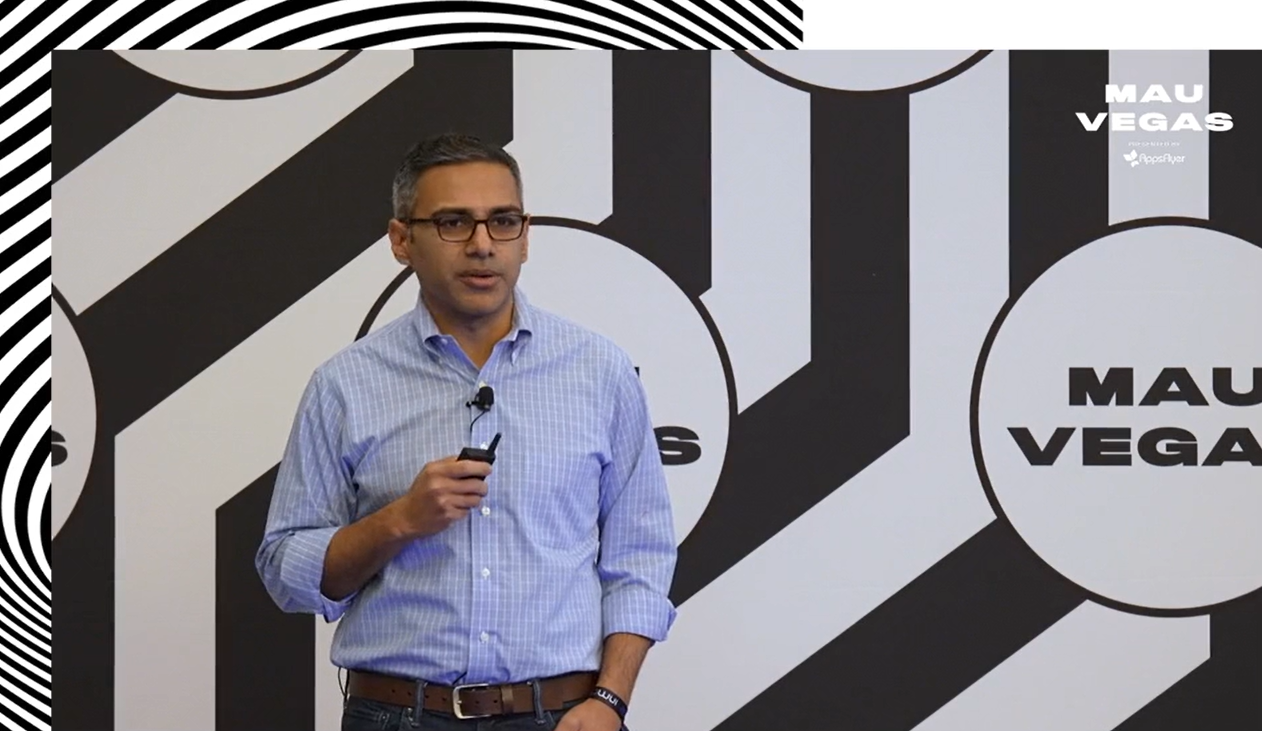
- Event: MAU Vegas 25
- Date: Thursday, May 21, 2025
- Speakers: Ali Pasha, Director, Product Management, AdMob, Andrew Hickey, Product Manager, Google Ad Manager
- Estimated read time: 6-7 minutes
Quick Read Summary
App monetization is no longer a separate system you tune after growth, it is a core part of how you protect user experience, fund product investment, and keep acquisition economics workable in a privacy constrained market.
Google’s message is that the healthiest apps will treat the ad stack as an ecosystem problem, not a set of disconnected settings. That means optimising auctions and formats for value, giving publishers real control, and giving buyers clearer signals that improve performance without compromising user choice.
The practical thread running through the product updates is straightforward, you can lift revenue and improve outcomes if you increase auction density and decision quality, segment experiences with intent, and prevent bad ads before they ship, not after users complain.
For leaders, the decision is not whether to add more demand, it is whether your app monetization strategy is built to adapt, with tooling that reduces setup friction, improves transparency, and makes privacy safe personalization real rather than aspirational.
Why the monetization conversation has changed
App leaders are managing a tougher equation than they were even a few years ago. User acquisition costs are rising, measurement is harder as privacy and policy changes evolve, and attribution is messy when data is fragmented across partners and platforms. At the same time, user behavior and spending habits keep shifting, which punishes any monetization setup that assumes yesterday’s patterns will hold.
The opportunity sits inside the constraint. If innovation is focused on clear user value, new ad formats can lift engagement rather than drain it, and enriched signals can improve relevance without reverting to blunt tracking approaches. The goal is not more ads, it is better decisions about when to show ads, what to show, and how to price every opportunity.
Ali Pasha framed the ambition simply.
“Imagine an app’s ecosystem where every ad interaction is an opportunity and not a compromise.” Ali Pasha, Director, Product Management, AdMob
That framing matters because it forces a higher bar. If an ad interaction is an “opportunity,” then revenue lift is not enough, you also have to defend retention, satisfaction, and brand trust. That is the organizing principle behind the product themes that follow.
Control is the new performance lever in app monetization strategy
One of the quiet realities in monetization is that complexity creates hidden tax. The more networks, bidders, and formats you add, the more time your team spends maintaining configuration, chasing edge cases, and fixing manual errors. Google’s updates consistently aim at reducing that tax while keeping publishers in control.
A clear example is hybrid mediation, combining traditional waterfall mediation with bidding for the same network buyer. The claim here is not just “bidding is better,” it is that hybrid gives you the flexibility to extract value from both models, depending on the partner and placement. In the transcript, Ali cited results of up to 20 percent higher CPMs in the auction when using hybrid mediation, plus early partner gains of up to 15 percent from a hybrid mediation optimization algorithm designed to tune these setups.
The second control lever is operational. Bulk action workflows, including CSV uploads for mediation changes, are positioned as a way to save several hours per week and reduce manual errors. In practice, that changes who can own the system. When configuration becomes repeatable and auditable, senior teams can set standards and guardrails, then delegate execution without losing confidence.
The third lever is segmentation that is tied to economics, not demographics. Ali described advanced segmentation that lets publishers segment users based on their actual CPM value, then tune networks and CPM floors by segment. Publishers adopting this approach have seen ARPU increases of up to about 10 percent, according to the transcript.
A useful way to interpret this is that segmentation is becoming a monetization primitive. It is no longer only about targeting ads, it is about tailoring the entire auction and experience layer to different cohorts, based on what the market will pay and what users will tolerate.
A practical caution, segmentation can also create uneven experiences that users notice, especially in social or competitive environments. If you pursue CPM based segmentation, align it to user value and engagement patterns, not just to yield.
Auction quality improvements, more density, less waste
If control is the philosophy, auction quality is the mechanism. Google’s updates focus on two persistent problems, missed opportunities and wasted requests.
On the publisher side, Ali introduced a Preloading API designed to ensure an ad impression is ready for the next opportunity, and importantly, to optimise loading the highest CPM possible. The goal is to make interstitial, rewarded, and app open formats available when they are most impactful, not when the SDK finally returns something.
Alongside that, a banner refresh plugin allows refresh rates to be adjusted per buyer so publishers can optimise setups by demand source rather than treating refresh as a single global choice.
On the buyer side, Andrew Hickey described Google AI smart throttling, which chooses the optimal mix of bid requests to send while respecting configured queries per second limits. The claimed outcome is cost savings without sacrificing performance, effectively shaping traffic so buyers are not overwhelmed with low value requests.
If you put those pieces together, the strategic direction is clear. The market is moving away from brute force scale, toward selective scale, where every request, impression, and auction step is curated to increase the probability of value.
A simple decision point for teams reviewing their stack, do you know where your waste is coming from, on the publisher side as missed fill and latency, or on the buyer side as request volume that does not convert to wins. Your answer should shape which set of tools you prioritise.
Ad formats that aim to earn attention, not steal it
When teams talk about ads and user experience, they often default to “less is more.” That is sometimes true, but the more durable idea is “fit is everything.” A format that fits the context can feel additive, while a format that fights the context feels extractive.
Google highlighted immersive in game ads that integrate into game environments and aim to enrich the player’s experience without disruption. Ali referenced early beta work with an example integration from “Phishing Hook by MobX.” The point is not the specific title, it is the design principle, the ad becomes part of the environment rather than a break in it.
They also introduced high engagement ads, an opt in format with flexible skippable configurations. For interstitial ads, publishers can set skippability at 12 seconds or less, and for rewarded ads, the skip time can be 60 seconds or less. The claim is that this can deliver meaningful performance uplift while managing user experience through explicit control.
This is where experienced leaders should slow down and be deliberate. Any format that increases engagement can also increase fatigue if it is overused. The right way to operationalise this is not “turn it on everywhere,” it is to define where the format earns the right to exist, for example:
- A limited set of placements where intent is already high
- Cohorts with demonstrated tolerance, such as long session users
- Clear caps and monitoring tied to retention, not only revenue
Brand safety and ad quality as retention work
Most teams treat ad quality as a compliance task, block a few categories, respond to complaints, move on. Google’s framing positions it as retention work.
The Ads Review Center is described as a centralised ad quality management layer across bidding sources, including SDK bidders, not only the AdMob network. The practical value is filtering unwanted ads, blocking creatives, and protecting the brand in one place, with the explicit goal of improving user lifetime value and retention.
A notable claim in the transcript is that AdMob and Ad Manager allow settings to be applied before an ad is served, which shifts brand safety from reactive moderation to preventive control. Support is also expanding so existing controls apply to SDK sources such as AppLovin, InMobi, ironSource, Pangle, and Unity, with Liftoff expected in “about one to two weeks,” as stated in the session.
Operationally, enhanced search filters, detailed metadata, revenue based sorting, and proactive monitoring alerts are all meant to reduce time to action, so teams can find and remove problems faster.
For senior leaders, the takeaway is that ad quality deserves the same operating rhythm as product quality. If you have incident response for crashes, you should have incident response for harmful creatives, because the end result is the same, users leave.
Collaboration and data transparency, performance without lock in
Andrew’s section makes a direct argument that inefficiency in the ecosystem is partly driven by unequal access to vital data, limiting choice and potential. His proposed fix is an upcoming server to server impression level ad revenue solution aimed at improving targeting for user acquisition campaigns, including tROAS use cases.
For publishers, the promise is “one click” enablement within AdMob or Ad Manager to share important data with preferred demand partners. For bidders, the promise is near real time transfer, less data loss through reliable server side integration, and deeper insights from enriched platform data that can improve tROAS models over time. He also called out early partners including InMobi, Integral, Moloco, and Unity.
The broader strategic idea is that better data plumbing raises the ceiling for everyone, but only if it does not become a lock in mechanism. Andrew explicitly framed the goal as an ecosystem where no one is locked into a specific DSP or SSP.
“This is about fostering a healthy, transparent ecosystem where everyone can succeed.” Andrew Hickey, Product Manager, Google Ad Manager
A practical implication for growth and monetization leaders, evaluate partners and integrations not only by today’s revenue lift, but by whether they expand your option set over time. Flexibility is a long run advantage when the privacy and measurement rules keep shifting.
Privacy safe personalization, first party signals that users can live with
The phrase “privacy safe personalization” can sound like marketing, but the transcript provides concrete mechanisms that make it more tangible.
Andrew outlined publisher first party IDs as a way to support advertising use cases like frequency capping when third party signals are limited or unavailable. That is a pragmatic bridge, frequency management is often the difference between ads that feel tolerable and ads that feel repetitive.
He also described user insight surveys within AdMob, particularly for iOS publishers, where users are occasionally prompted with a few simple questions about interests and preferences. Publishers can then share those preferences with bidders to enable more relevant ad experiences, especially when device IDs are not available. The transcript cites a median revenue uplift of about 5 percent for participating iOS apps.
Finally, he described secure signals, positioning them as a way for buyers to collect preferred identity solutions, with publishers choosing whether to pass those signals securely to bidding partners. He explicitly connected this to responsible personalization and user choice.
A practical caution is user trust. Surveys can be powerful, but only if the prompting is respectful and the value exchange is clear. If you deploy this kind of mechanism, align product, legal, and marketing on three basics, when you ask, what you ask, and how you explain the benefit to the user.
Conclusion
The thesis behind Google’s updates is that the next era of app growth will reward teams that treat monetization as an ecosystem discipline, not a yield tweak. If you want a resilient app monetization strategy, focus on control, auction quality, and user aligned formats, then use privacy safe personalization to keep relevance high without undermining choice. Done well, ads stop being a compromise, they become one of the ways your product funds innovation without costing you trust.
Speakers
Ali Pasha, Director, Product Management, AdMob. Ali is a seasoned ads product leader. He leads app ads monetization strategy across AdMob and AdManager, and manages product and infrastructure teams spanning platform, bidding, privacy, fraud, and ad formats. As of 2023, he also took on responsibility for the AdSense and GameSnacks product.
Andrew Hickey, Product Manager, Google Ad Manager. Andrew is a results driven Product Manager with over six years of experience leading transformative products. At Google, he is the lead Product Manager for SDK Bidding and a Product Manager on Google Ad Manager, focused on app monetization, traffic shaping, inventory packaging, and brand safety.